Handmade by Friendship Bridge gives knowledge so Guatemalan artisans gain
Knowing it takes far more than loans to transform the lives of women who have experienced fewer opportunities, Friendship Bridge in Guatemala certainly knows how to Give To Gain.
Friendship Bridge's mission is to empower women and eliminate poverty. The group gives artisans the training and tools needed to grow their businesses and thrive in a competitive artisan market. In response, artisans gain confidence and the ability to support themselves and their families. This changes the trajectory for future generations of Guatemalan women.
In 2025, Handmade by Friendship Bridge surpassed its annual revenue goal, earning $175,300, the highest ever since the implementation of the program, through the production of 21,000 products in total. By connecting artisans to U.S. and international markets, the program helps women stabilize income, build skills, and grow sustainable businesses while preserving cultural traditions.
Giving educational opportunities to her daughter
Rosario [pictured above] from San Juan la Laguna in Guatemala is one of six children in a humble, hardworking family. She remembers selling spare parts with her siblings after school. Her father was a day laborer; her mother was a homemaker and weaver. Rosario’s mother taught her to weave at age 7. As the oldest sister in the family, she then helped her younger siblings learn to weave. Today, her favorite items to make are handwoven scarves and place mats, because of the designs and colors she can combine.
Rosario’s inspiration to create comes from small details she sees throughout her day, including nature and her son’s drawings. Both her husband and her adult daughter are involved in her weaving business, and she is committed to high quality. Since joining Handmade by Friendship Bridge, the artisan program of this micro-finance nonprofit that provides loans to women,Rosario has appreciated the support she has received with small loans so she can invest in raw materials. She also appreciates the support she has received for product sales.
"Rosario’s goal is to receive more orders, so that she is more able to Give To Gain. She plans to use the income from her business to send her daughter to college, and would also like to purchase a computer for her daughter to use in school," explains Friendship Bridge.
Giving women employment in the local community
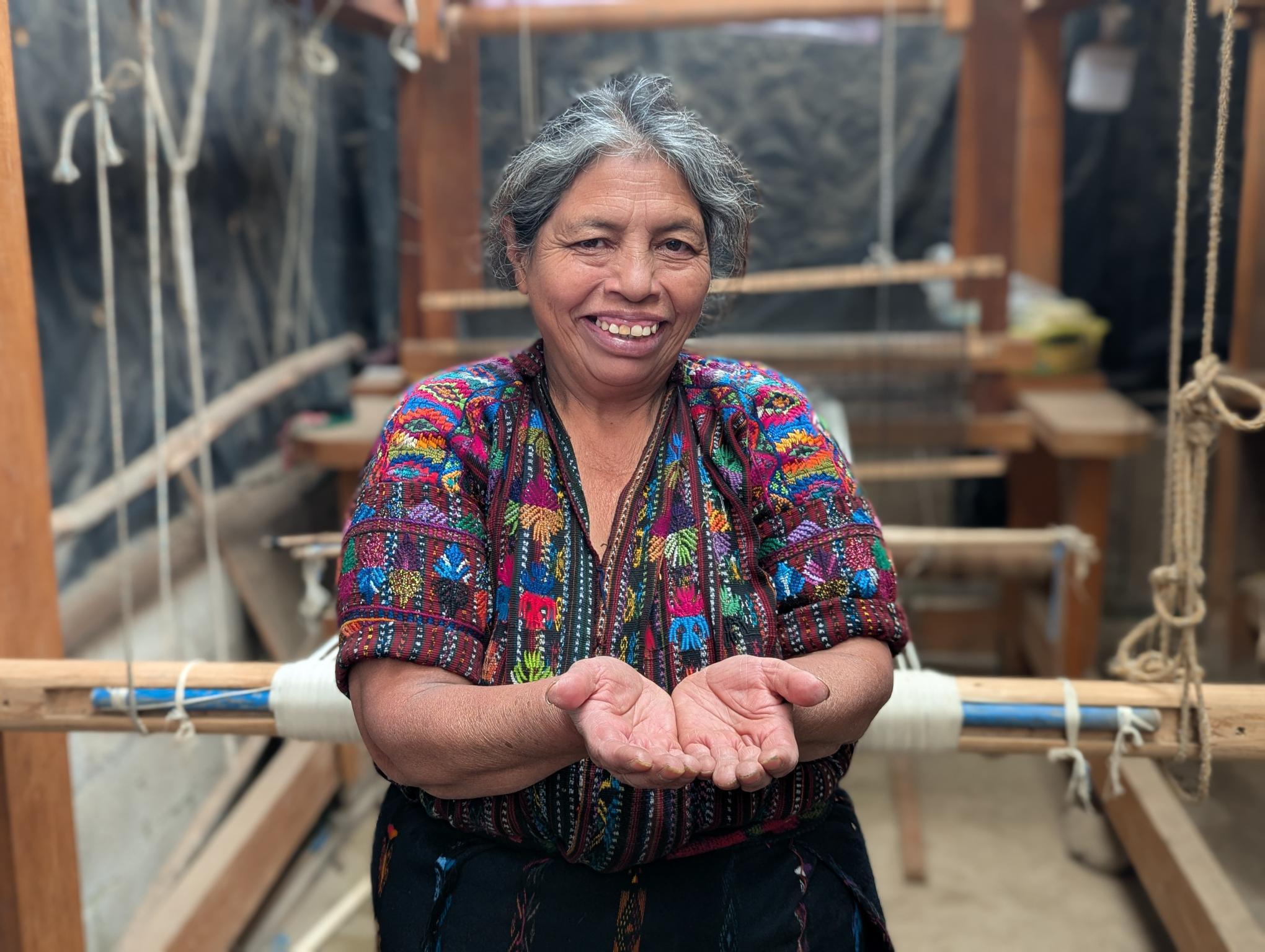
As a child, the dream of Marcela from El Tablón, Sololá in Guatemala, was to have new clothes, or at least ones in good condition, so she began to weave her own.
Her mother was a weaver of traditional Guatemalan blouses and taught Marcela at a young age. She grew up around her father who earned a living by selling traditional Guatemalan clothes in the market of Sololá, Guatemala. Now, she weaves cloth napkins, shawls, scarves, tablecloths, and other items in a variety of colors and styles.
When Marcela's husband passed away more than 20 years ago, she got a small business loan through Friendship Bridge as the means to grow her business, so she could support her fiove children. With her first loan, she started a traditional textile business.
"Over the years, Maria has become the epitome of Give To Gain. She joined the Handmade by Friendship Bridge artisan program as a way to grow her business, support her family, and allow her children to stay in school. In the meantime, she has employed many women from her community to help with orders, and received business training. Her textile business continues to support her needs as a single woman," says Friendship Bridge.
Giving career opportunities for her own family
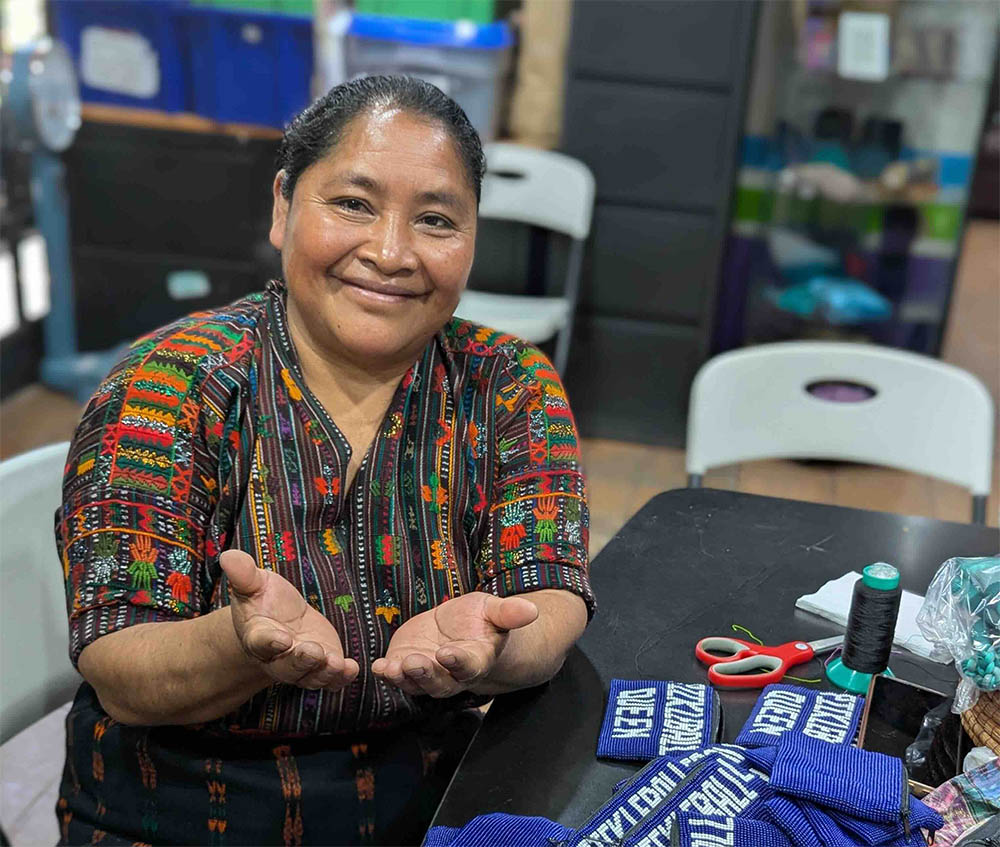
María's mother died when she was only six. She attended school through sixth grade in Sololá Guatemala, after which time she worked with her father and brothers. She worked alongside her father and brothers in a handicrafts business, and she grew to enjoy the work. When she married at 17, Maria and her husband operated a beaded jewelry business together for which María managed the finances. They partnered with other bead artisans and their business grew considerably. When María separated from her husband, he took over the business. But it wasn’t long before the business ceased to be profitable without María as a partner.
"María showed she could Give To Gain by working hard to earn money on her own. She moved back to her father’s house with her six children and began to rebuild her business. Many of her former customers sought her out again due to her quality products, and she joined Friendship Bridge for a small business loan. Her hard work has helped her children graduate from high school. Her business success has allowed her to give back to her community, providing food and part-time work opportunities to many women in need. María is committed to ensuring her children have access to more opportunities and plans to go into business with them," explains Friendship Bridge.
María hopes to build commercial units that she can rent out to other businesses and also use for her own sales. She would also like to start a small garden and sell the fruit that she harvests, as well as open a bakery that her son could someday operate.
Giving a better future to her children
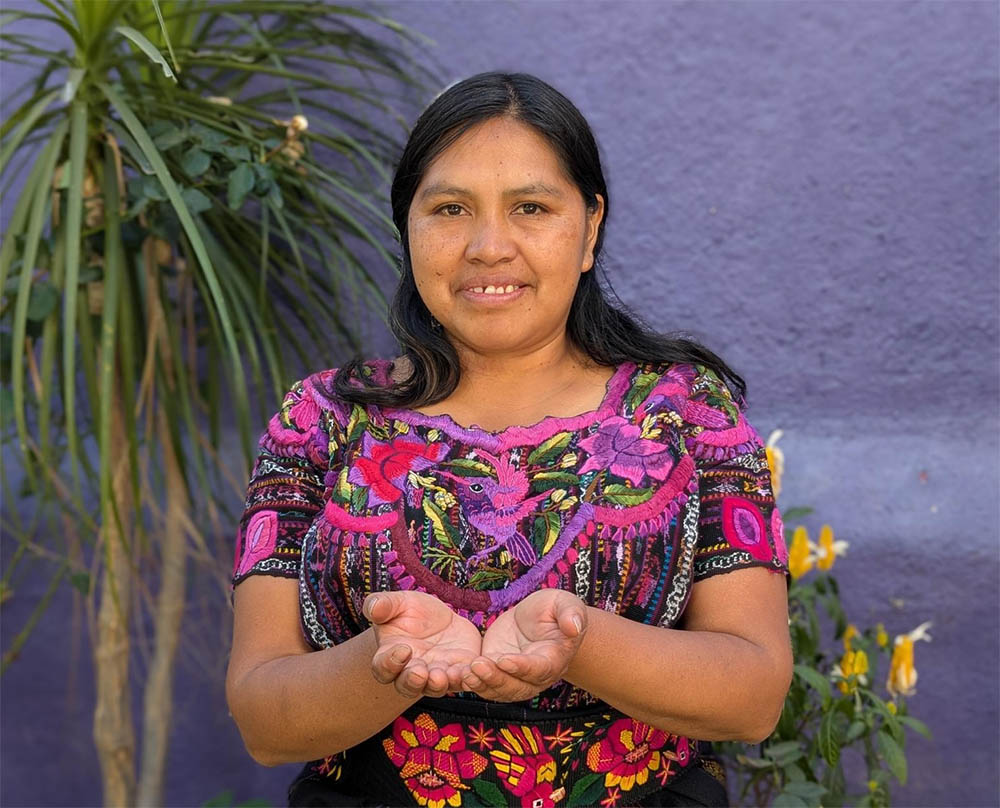
Angelina from Sololá in Guatemala received a second-grade education before having to drop out of school to help support her family. Abuse and alcoholism were prevalent among those close to her.
Angelina learned artisan techniques as a girl by watching other women in her rural Guatemalan community. By the time she was 18, she knew how to make backpacks, necklaces, and bracelets, handwoven straw baskets, and embroidered textiles. She wanted to build her business but didn’t know how to go about it.
"Through Handmade by Friendship Bridge, Angelina was introduced to a corporate client that began exporting her products worldwide. The income she earns by selling her handmade products has enabled her to Give To Gain and build her own home. She works hard in order to build a better future for her three children and provides them with the education she never had," says Friendship Bridge.
Giving herself a college education
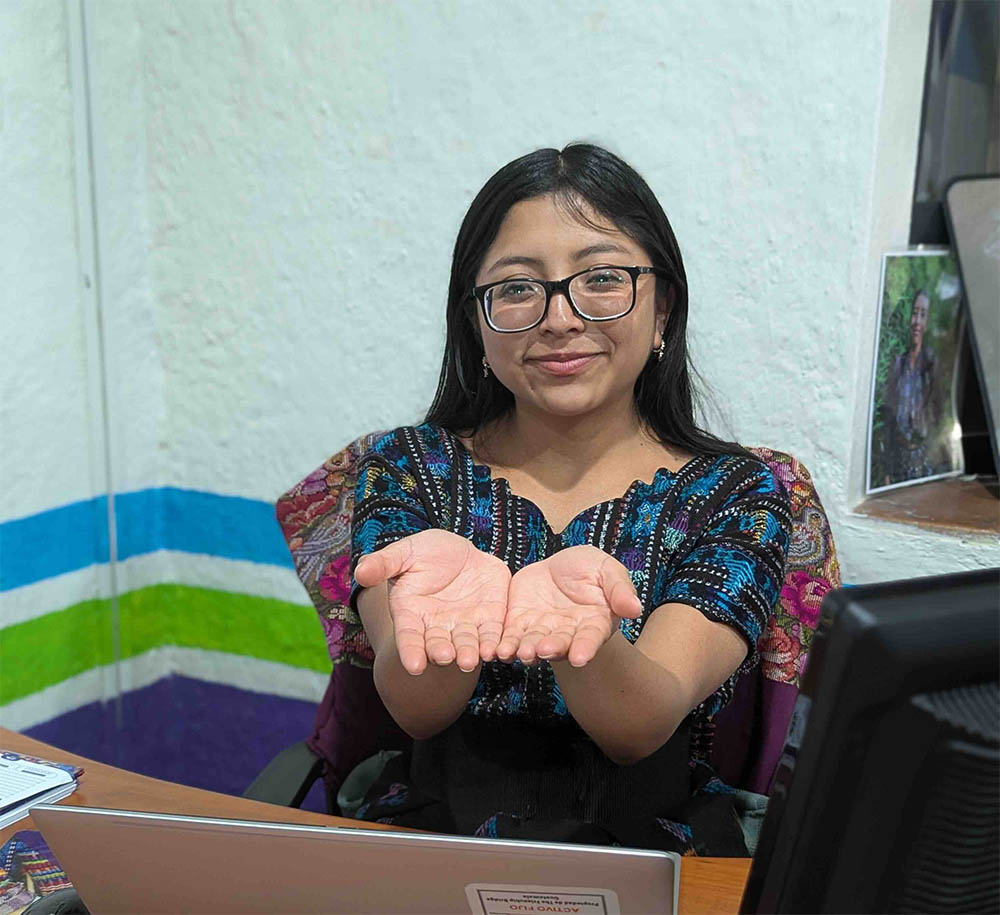
Renata works as the Artisan Assistant for Handmade by Friendship Bridge. She is the main connection between Handmade by Friendship Bridge staff and the artisans clients served.
Renata is in charge of developing a complete training and mentoring roadmap for the artisans in order to help them grow their businesses, and manages administrative tasks for Handmade by Friendship Bridge. Renata always has innovative ideas and drives the team toward great solutions.
"Renata demonstrates that she is an example of the Give To Gain perspective through the many low-income women she supports through her work. Her work allows her to continue her college education and help support her family," says Friendship Bridge.
Giving women artisans business support
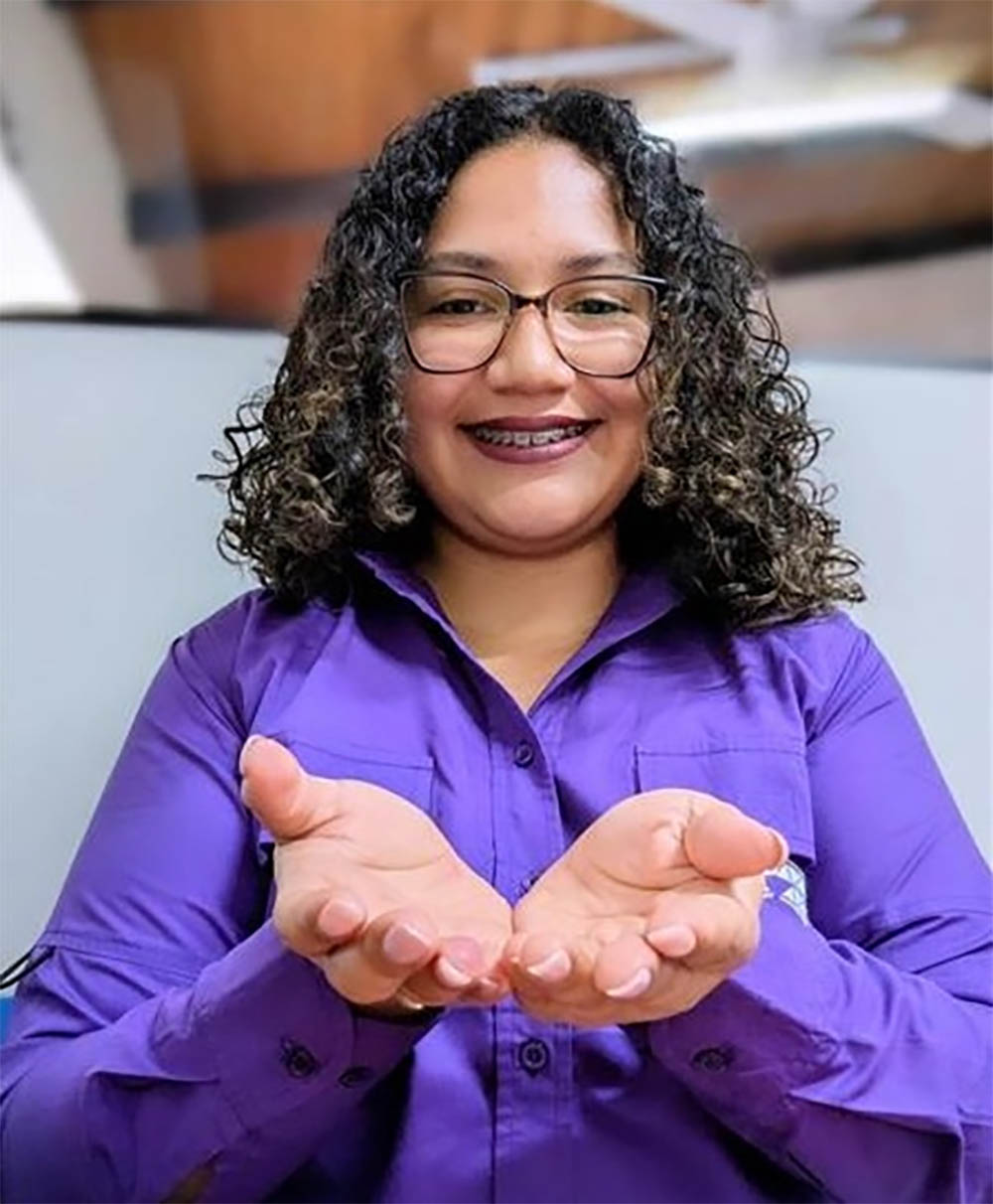
Indira is native Guatemalan who is the first person in her family to graduate college, and is a young professional in her 20s. She works as the Communications, Public Relations, and Visual Design Coordinator for Handmade by Friendship Bridge.
"Indira's life is an example of the Give To Gain ethos. She is the primary family income earner for her mother and two younger brothers, and is committed to helping her brothers get through college. She is a leader in her position at Handmade by Friendship Bridge. She works daily alongside low-income Guatemalan women artisans, assisting them in expanding their businesses, guiding their creative journeys, and helping them thrive in their home country, as she has," says Friendship Bridge.
Learn more about IWD Giving member Friendship Bridge
Established in 1990 and headquartered in Lakewood, Colorado, Friendship Bridge operates 13 branch offices in Guatemala and provides a suite of products and services including micro-credit, non-formal education, and access to culturally-appropriate healthcare. Its clients are 100% women, primarily indigenous Maya, and live in rural communities with some of the highest poverty levels worldwide.
Friendship Bridge’s history began with its work in Vietnam providing medical education and shipping medical supplies to impoverished populations in war-ravaged areas. While medical supplies were positively impacting the lives of recipients, Friendship Bridge was looking for a more sustainable solution to poverty reduction. The solution was micro-credit.
In 1994, Friendship Bridge shifted its focus from medical supplies to micro-credit and began offering small loans to impoverished women. Friendship Bridge's clients, indigenous women who were deemed “unbankable,” started or expanded small businesses and began creating their own sustainable solutions to poverty.
In 1998, Friendship Bridge expanded its work to Guatemala, another war-ravaged country suffering extreme poverty and offering limited opportunities to women. Friendship Bridge shifted out of Vietnam as operations in Vietnam became unsustainable due to an unfavorable political climate. Focusing solely on Guatemala, and aided by investment from American donors, the seeds of the Micro-credit Plus program were planted.
By 2003, almost 3,000 clients were borrowing from Friendship Bridge. By 2006 the number tripled to 9,000 clients, and today Friendship Bridge reaches over 36,000 women through its Micro-credit Plus programs.
Gaining knowledge to operate businesses
Due to poverty, many Handmade by Friendship Bridge’s clients had dropped out of school at an early age to work and help support their families. While this means they became highly skilled at weaving, sewing, beading, and the creation of other handicrafts, without education, they often lacked knowledge about how to operate successful businesses. This is where training and education from the Handmade by Friendship Bridge’s team comes in.
“In developing countries like Guatemala, sometimes services are not oriented to a structure. For example, if you want to take a bus in Guatemala at a certain time, you might get one, or you might not. There is a different structure of how Guatemalan culture runs,” says Handmade by Friendship Bridge Senior Coordinator, Sussan Hrozek. This cultural difference can be a hindrance to artisans when it comes to increasing product sales in an international market, which in turn could affect their ability to support their families well. Because Handmade by Friendship Bridge staff in Guatemala works closely with their artisans, they see the areas in which the artisans are most in need of professional development.
Financial planning to meet production deadlines
In the past, when Handmade by Friendship Bridge artisans received larger orders, some would decline because they didn’t have enough raw materials on hand to fulfill them.
“Planning ahead is not something our artisans are used to, and for business, this can be a big challenge,” notes Sussan.
To help change this, Handmade by Friendship Bridge developed a learning system that is sent to the artisans via WhatsApp. The system includes lessons, for example, on how proper financial management is important when consistently fulfilling orders. Artisans receive tips on how to analyze their production costs, research competitors, and look for ethical suppliers that will allow them to purchase raw materials at a reasonable rate, even when prices change.
In addition, when artisans receive larger orders, Handmade by Friendship Bridge staff supports them by creating a delivery plan, which is customized for the artisan. The plan includes things like quantities needed and dates on which they will need to deliver them. Artisans also receive instruction and mentoring on how to use the plan to stay on task. As part of this, artisans receive incentives such as money for groceries or tools needed for work (like a desk lamp) if they meet their deadlines on time.
“The incentives work well. We have seen a big difference in the past year, not only with delivery, but also with quality. For example, one artisan was motivated to begin using higher quality thread for bracelets because she wants her work to reflect a high standard,” says Handmade by Friendship Bridge Communications & Visual Design Coordinator Indira Maldonado, who also teaches training.
Creating new designs is sometimes a difficult concept for the artisans, especially the older artisans who have created their products the same way for many years. With the goal of diversifying their creative abilities in order to generate more sales opportunities, Handmade by Friendship Bridge staff offers artisans a training that is more creative in nature.
Indira starts by showing the artisans a color wheel and teaching them how to read it so they can confidently combine colors that work well together every time. Indira also discusses shape and patterns with the same goal. Artisans are then asked to create a new product design in the class, keeping what they learned about color, shape, and pattern in mind. Additionally, Indira discusses trends and times of the year where artisans can capitalize on more sales, such as Christmastime, and talks about the kinds of products people tend to purchase at that time. In this training, Indira has seen artisans expand their limits of the kinds of products they usually create.
“Even the older artisans are beginning to ask questions about how they can design differently and more creatively. The change of mind I’m seeing is encouraging, and I love seeing them thinking about what else they can create,” says Indira.
Artisans that are used to selling direct to customers in Guatemala's markets don't always consider the need for consistent measurements and sizing.
“That's the reality. The artisans who haven't had the opportunity to attend trainings are not aware of quality or standards. Our staff teaches artisans about standard measurements before they produce items for our online store, and the ones that take this seriously consistently have high sales,” explains Indira.
Handmade by Friendship Bridge artisans have the opportunity to earn a standards certification through a Guatemalan technical training school. After certification, artisans will confidently be able to create products for international markets consistently, by following guidelines from the course.
“Our artisans have so much potential and they are ready to do the hard work necessary to create thriving businesses for their families,” adds Sussan.
Giving so much back to Guatemalan artisans in terms of training certainly takes more time than issuing them a business loan and hoping they use it wisely, but Handmade by Friendship Bridge believes it's worth it. Every day, the team sees Guatemalan artisan women gain independence, resilience, and business acumen that they can pass down to their children, and create generational change.
Donate to positively change a woman's life
Part of the IWD Giving ecosystem, Friendship Bridge helps women build small businesses so they can increase their income, provide for their family, and create jobs in their community in Guatemala.
Support Friendship Bridge's mission to create opportunities that empower women in Guatemala to build a better life.