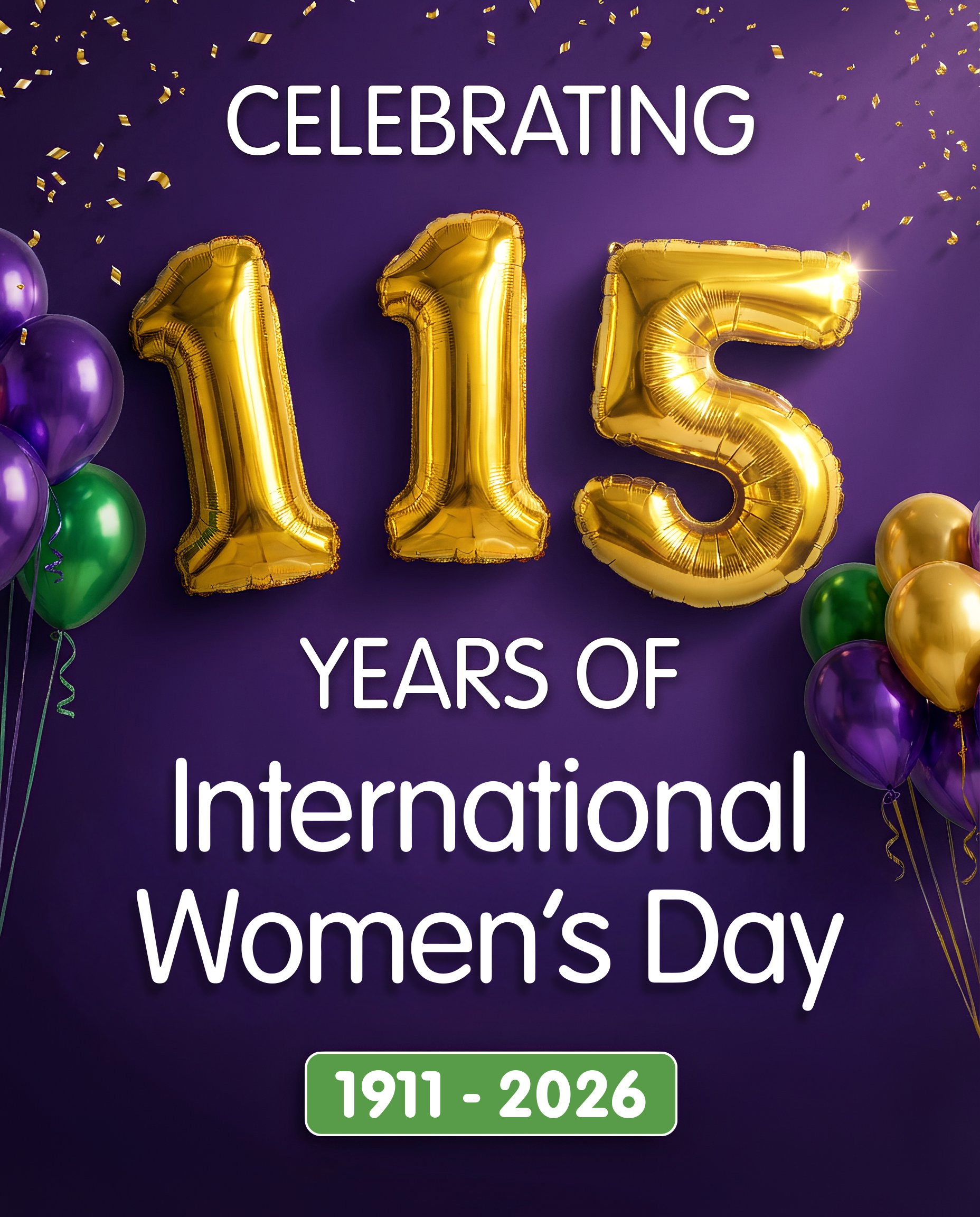
2026 marked 115 years of International Women's Day
International Women’s Day (IWD) 2026 marked an extraordinary milestone: 115 years of collective action, advocacy, and progress toward gender equality.
What began in the early 20th century as a movement demanding fair wages, safer working conditions, and the right to vote has grown into a global day of recognition, reflection, and renewed commitment.
Building on the courage of those before us
Over more than a century, IWD has helped drive transformative change. Women have secured legal rights once denied, entered professions previously closed to them, and reshaped leadership across politics, business, science, sport, and culture. Each generation has built on the courage of those before it, pushing boundaries and redefining what is possible.
Yet celebrating 115 years was not just about looking back. It was also about facing the present with clarity and urgency. Gender inequality persists in many forms: pay gaps, underrepresentation in leadership, gender-based violence, and unequal access to education and healthcare. Progress has been real, but it has not been equal, and it has not been finished.
When women thrive, we all rise
IWD serves as a powerful reminder that equality is not a “women’s issue” alone. It is a social, economic, and human rights imperative that benefits everyone.
When women thrive, communities prosper, innovation accelerates, and societies become more just and resilient.
Taking meaningful action
The milestone year honored the activists, workers, caregivers, and leaders who have shaped the movement, both those known and unknown.
The milestone also challenged organizations, governments, and individuals to move beyond symbolic gestures through taking meaningful action: closing gender pay gaps, supporting women’s leadership, addressing systemic bias, and amplifying diverse voices.
Forging an equal future
Celebrating 115 years of IWD has ultimately been about momentum and recognizing how far we have come, while collectively and unapologetically committing to how far we still must go.
Equality is not inevitable; it is achieved through sustained action. And the work continues.
A long and vibrant history
IWD has an incredibly long and vibrant history, forged by numerous groups and movements worldwide.
IWD started in the same year that Ginger Rogers, Lucille Ball, and Mahalia Jackson were born. It was the same year that Marie Curie won her second Nobel Prize in Chemistry. IWD is as old as the Indy 500, which also began in 1911.
From the 1920's, various countries started to declare IWD as a public holiday, celebrated with flowers, gifts, and special events honoring women.
Through the decades, widespread action has fueled the day's momentum and set a tone for the truly eclectic and inclusive movement that IWD has become.
A worldwide call-to-action, not just a celebration
IWD has consistently been a catalyst, not just a celebration.
IWD is when:
-
Movements gain momentum
-
Organizations make commitments
-
Inequality becomes headline news
-
Collective action becomes more visible
Across decades and continents, IWD has proven that symbolic moments can help drive real change when they are backed by action.
A popular mainstream moment
Today, IWD serves as a popular mainstream moment that celebrates the social, economic, and political achievements of women. The day also marks a call to action for advancing gender equality worldwide.
Worldwide, there are many groups that mark IWD. From small gatherings and parties to rallies and large-scale events, the activity of all groups is valid. That's what makes IWD so inclusive, never exclusive. There is no right, or wrong, way to mark IWD. There are only many ways.
IWD's 115th year saw many groups worldwide helping forge the advancement of women and girls worldwide.
Reference: 21620